| Print |
Operational review BIDVEST FOODSERVICE EUROPE
 |
| Bidvest Europe is a market-leading, multi-temperature foodservice product distributor serving customers in the catering, institutional and hospitality sectors in the united Kingdom, Belgium, the netherlands, Czech Republic, Slovakia, Poland, the Baltic States, Saudi arabia and the united arab Emirates. The product and service range includes own-brands, finished products, fresh produce, food ingredients, seafood, equipment and logistics solutions. The business operates as a solution-finder and partners customers in areas such as menu development and the delivery of one-stop ordering efficiencies. |
3663 Wholesale Bidvest Logistics Seafood Holdings Deli XL Belgium |
Deli XL Netherlands Nowaco Farutex Horeca Trade and Al Diyafa |
“Management will drive improvements in the free-trade mix, grow margins across all sectors and maintain national account volumes. Our ecommerce initiative had a successful launch, preparing the way for further growth through this channel. Costs receive continued attention.” Bernard Berson
|
||
|

Financial performance
Environmental performance
Social performance
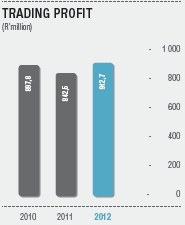
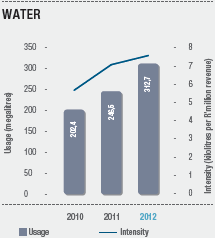
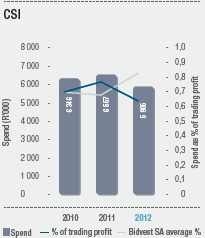
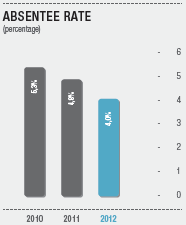
Societal informationEmployee numbers increased to 10 986 and training spend increased to R14,6 million (2011: R12,4 million) which represents R1 330 per person. Training hours per person increased from 9,3 hours in 2011 to 14,0 hours in 2012. Divisional absentee rate has dropped to 4,0%. 3663 First for Foodservice (uK)3663 sources the majority of its electricity from renewable sources and has expanded its healthier product offering. Its depots use technology such as sensor lighting, refrigeration heat recovery units and water harvesting to ensure an emphasis on reducing their greenhouse gas emissions. Since 2004, 3663 has been supporting and guiding its own-brand suppliers to improve their environmental performance. Since 2007, 3663 has achieved an emissions reduction of 20,3% and a reduction of 9,3% in electricity consumption has been reported. Water usage has also decreased from 93 050 (2011) to 88 332 kilolitres. CSI spend has increased to R2,4 million (2011: R1,8 million) and 3663 encourages employees to actively support charitable initiatives with over 810 working days given to local communities by employees. 3663 actively engages with its workforce and conducts regular employee surveys. By using rainwater harvesting and recycling, almost eight million litres of water has been saved in 2012. Despite difficult trading conditions as Britain slipped back into recession in the second half, the business achieved pleasing revenue and profit growth. Revenue rose by 7,7% to £1,1 billion and trading profit by 2,3% to £35,1 million. Working capital performance remained strong. Margins came under pressure, but growth in ROFE was achieved. Free-trade volumes showed encouraging growth. Among specialist operations, profits at both Catering Equipment and Swithenbank Fresh & Fine Foods exceeded expectation while VIVAS returned to profit. Working capital performance remained strong and inventory levels were only slightly ahead of prior year, despite increased volumes and preparations for the London Olympics. The Reflex IT system was successfully implemented, on time and on budget. Bad debt risk remains high as economic conditions continue to deteriorate. In the coming year, management will drive improvements in the free-trade mix, grow margins across all sectors and maintain national account volumes. Our ecommerce initiative had a successful soft launch, preparing the way for further growth through this channel. Costs receive continued attention. Forteith Foodservice, a small West of Scotland business, was acquired immediately after year-end. Bidvest LogisticsThe business returned to profit, but the level was somewhat below budget. Sales growth was above expectation, though the rate of growth slowed in the final quarter. Margin improvements were achieved. Expenses rose, however. Contract extensions and contract expansion among current national clients was positive, creating a stable base going forward. Total cash flow recovered strongly and bad debt was well controlled. Seafood HoldingsSales rose, lifted by a strong fourth quarter, but margins remained flat and trading profit was below expectation. National account gains buoyed sales. Volumes into the independent market moved higher and the customer-base grew. However, average customer spend dipped as customers moved to low-margin options. Falling salmon prices were negative. Bad debt provisions were increased as restaurant customers experienced growing pressure. Higher sales and production costs drove overheads above budget. In the year ahead, management will focus on increasing average delivery values while seeking efficiencies to better capture the value of sales growth. Deli XL NetherlandsThe national economy continued to contract, unemployment rose and consumers cut their spending. Revenue was down 2,8% to CSI spend increased to R3,5 million (2011: R2,9 million); training spend increased to R6,2 million (2011: R4,7 million) and represents a spend of R3 411 per employee. Deli XL has set a target to reduce Scope 1 and 2 emissions by 20% per tonne of product by 2015, using 2008 levels. Good progress is being made. Water usage continues to decrease. Deli XL BelgiumGDP growth slowed and contraction of the economy is expected for calendar 2012. Sales growth exceeded budget, with revenue growth of 14,8% to €316,5 million, but trading profit was impacted by restructuring costs and tighter margins. ROFE dipped versus the prior period. The institutional channel faced significant pressure. Sales across the catering, hotel and restaurant, hospitality and logistics segments were better than anticipated, but margin erosion, specifically in the institutional channel, was significant. Nowaco Czech Republic and SlovakiaMarket conditions remained challenging as consumers cut their discretionary spending and competition sharpened. However, the business achieved year-on-year revenue growth of 1,5% to CZK8,0 billion. Margins were maintained and costs were well controlled. ROFE fell. Red meat and bakery products achieved growth. A new red meat factory opens next year to grow game volumes. Gastrostella sales fell. Slovakia’s high season ice cream sales almost doubled. Nowaco BalticsA loss was recorded as sales versus prior year and budget fell in the face of competition from private labels and low-cost products. Retail sales were under strong pressure, but foodservice achieved some growth. Farutex PolandGDP growth dipped while inflation and unemployment moved higher. Despite these challenges, good sales growth was achieved, though trading profit fell below target. Sales increased to both wholesale and individual customers. Four depots were enlarged in pursuit of efficiency gains and continued sales growth in the coming year. ROFE was significantly below budget. Margins and overheads were well managed. Expenses rose as a result of sales expansion and pressure on fuel and energy costs. Horeca united Arab emiratesRevenue was 3% ahead of budget and 22% above last year, but trading profit fell short of expectations. Operating expenses were reduced and ROFE moved higher than target. Beef, seafood and foodservice were strong performers. Two new beef brands were added and a full seafood range is now available. HORECA Express, launched in the year, was a positive move towards reaching additional coverage of street restaurants. The sales team continues to grow in preparation for the upcoming setup in the capital Abu Dhabi. New hotel openings will be positive for the business in the coming year. Al Diyafa Saudi ArabiaThe aggressive fiscal policy of the government delivered exceptional market conditions for the business. Sales, trading profit and ROFE were significantly above expectation as the joint venture enjoyed a record fourth quarter. Growth in the customer-base was pleasing and margins improved. |